
Looking for more?
Whether you're a parent, trusted adult, or young person, understanding the language around cannabis is a good place to start. Here's what you need to know.
A
-
Adult-use Cannabis
“Adult-use” cannabis, sometimes called “recreational” cannabis, refers to cannabis or cannabis products legal for adults 21 and older provided by businesses licensed by New York State.
B
-
Blunt
A “blunt” is a cigar that is filled with cannabis. Blunts are typically bigger than joints, have more cannabis than your average joint, and may contain tobacco. Products that contain tobacco or nicotine are not allowed to be sold in legal dispensaries in New York State.
C
-
Cannabidiol (CBD)
Cannabidiol, or CBD, is a non-intoxicating compound produced by the cannabis plant. Hemp, a type of cannabis plant, is grown to be high in CBD and low in THC. Most CBD products are made by extracting CBD from hemp and may come in many different forms, such as tinctures (e.g., CBD oil), pills or capsules, balms and lotions, and food and beverage products. In New York State, these products are not allowed to have more than 0.3% THC.
-
Cannabinoid Hyperemesis Syndrome
Cannabinoid Hyperemesis Syndrome is a medical condition that can develop in individuals who consume cannabis frequently over time. It causes the body to react in unexpected ways, including severe abdominal pain, persistent nausea, and repeated vomiting, sometimes uncontrollably.
-
Cannabinoids
Cannabinoids are the diverse chemical compounds found in the cannabis plant. Delta-9 THC (tetrahydrocannabinol) and CBD (cannabidiol) are the most well-known cannabinoids, but the cannabis plant produces hundreds of different cannabinoids.
-
Cannabis
Cannabis, commonly referred to as weed, pot, ganja, zaza, etc., is a plant from the Cannabaceae family. Cannabis has been used for thousands of years to treat medical conditions, in spiritual practices, to support wellness, and for recreational purposes. It contains many different compounds and can be used and consumed in many different ways. Cannabis is the preferred scientific and legal name.
-
Cannabis Use Disorder
Some people may develop a health condition called Cannabis Use Disorder. This means they continue using cannabis even when it is causing problems in their daily life, and they find it hard to cut down or stop. Cannabis Use Disorder is treatable and should be discussed with a healthcare provider.
-
Cartridge
A cartridge (or “cart”) is a small container or reservoir filled with cannabis oil or concentrate that is used with a vape pen or vaporizer device to create a vapor that is inhaled.
-
Certificate of Analysis (CoA)
A certificate of analysis (CoA) is a document from a certified lab that provides the testing results of a cannabis product. The CoA allows consumers to easily access details related to specific testing results that are required by New York State for each cannabis product type. It verifies the product’s potency and that it does not contain harmful amounts of certain contaminants. In New York State, all cannabis products are required to provide access to their CoA on the label through a QR code or link. Learn how to read a CoA.
-
Certified Patient
Certified patients are eligible to use medical cannabis if approved by a certifying health care provider, as part of the New York State Medical Cannabis Program. This certification allows individuals to purchase medical cannabis products from a licensed medical dispensary in New York State. Learn more about becoming a certified patient.
-
Concentrates
Concentrates are cannabis products that are one of the most potent (or strongest) forms of cannabis, because they contain high levels of THC. Concentrates can come in many forms, including oils, wax, shatter, live rosin, and vape products, and are generally consumed by vaping, smoking, or used for “dabbing.”
D
-
Dabbing
Dabbing involves vaporizing highly concentrated cannabis using a special pipe called a “dab.” It is known for being fast-acting and delivering high levels of THC, which makes it incredibly easy to overconsume.
-
Delta-8 THC, Delta-10 THC
Delta-8 THC and Delta-10 THC are psychoactive cannabinoids that can cause a high, similar to Delta-9 THC. Delta-8 THC and Delta-10 THC can be found in small amounts naturally in the cannabis plant, but Delta-8 THC and Delta-10 THC products are typically made by converting CBD from the hemp plant through a chemical process. While they can be found in unlicensed shops as gummies, vapes, drinks, and other products, Delta-8 THC and Delta-10 THC products are prohibited in New York State and are not held to any safety rules about how they’re made or sold. This means they can have unpredictable effects or harmful amounts of contaminants.
-
Delta-9 THC
Delta-9 THC, commonly referred to as THC, is a cannabinoid in the cannabis plant that is known for its psychoactive effects, or the feeling of being “high.” Most times when you hear “THC,” this is the form of THC that people are referring to.
-
Designated caregiver
A designated caregiver is an adult 18 or older who is identified by a certified patient in the New York State Medical Cannabis Program to assist in purchasing and/or administering their medical cannabis products. Certified medical cannabis patients under 18 must have a designated caregiver.
-
Dispensary
A dispensary is a store that sells cannabis products. Some dispensaries are licensed and regulated by New York State, meaning the products must meet testing, packaging, and safety requirements. Others may operate without a license, which can make it harder to know how the products were made or what they actually contain. The Dispensary Verification Tool helps to identify a licensed dispensary. Learn more about regulated, licensed dispensaries in New York.
-
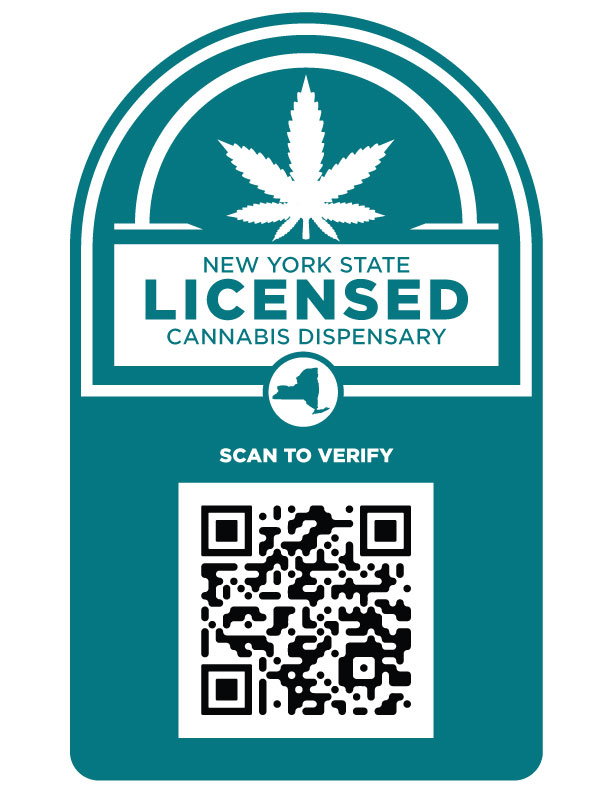
Dispensary Verification Tool
The Dispensary Verification Tool is a decal that must be posted at the main entrance of every licensed adult-use dispensary. The decal includes a QR code that can be scanned to direct individuals to OCM’s website, which provides a list of licensed adult-use cannabis dispensaries.
Find a licensed medical dispensary.
E
-
Edibles
Edibles are foods, such as gummies, baked goods, and drinks, that contain cannabis. Edibles can look like regular food and candy, which makes them easy to underestimate or consume without meaning to. It may take up to four hours to feel the effects of edibles, so it can be easy to consume more than intended. This can be particularly dangerous for young children, making safe cannabis storage an important component of being a responsible consumer. Learn more about safely storing cannabis.
Learn more about edibles.
Additional Languages: English | Español | 한국어 | יידיש | Français | Kreyòl Ayisyen -
Extract
Cannabis extracts are concentrated cannabis products made by removing THC, CBD, and other compounds from the cannabis plant using substances like CO2 or alcohol, or using heat. These extracts are used to make products like cannabis oils, waxes, vape products, and other concentrated cannabis products that usually have much stronger effects than cannabis flower.
F
-
Flower
Flower or “bud” is the dried, cured, and smokeable part of the cannabis plant. It is mostly consumed via smoking in joints, pipes, and bongs. Flower is covered in resin glands (trichomes), which contain most of the plant’s cannabinoids, making them the most potent part of the cannabis plant.
G
-
Greening Out
“Greening out” refers to the feeling of being “too high,” or overconsuming cannabis. Symptoms can include a racing heart, dizziness, nausea, vomiting, and hallucinations.
H
-
Hash
Hash, or hashish, is a potent cannabis concentrate made by compressing the resin glands (trichomes) of the cannabis flower. Hash is typically smoked, vaporized, or eaten.
-
Hemp
Hemp is a type of cannabis plant, and cannabidiol (CBD) is one of the main compounds naturally found in hemp. Hemp can be used to make a variety of different products – from rope to soap to concrete! Many consumable hemp products are made by extracting CBD from the hemp plant. These CBD-only products typically do not make you feel “high.” However, (and this is a big however) not all hemp products are legal or safe. Because of a federal legal loophole, a wide range of intoxicating hemp products are now being sold that are manufactured to make people feel high. Even though these are not allowed to be legally sold in New York State, you may still see them out in the wild. They may also contain harmful chemicals, pesticides, or may not even have any real cannabinoids in them at all.
For these reasons, intoxicating hemp products can have unpredictable effects and can put people at risk of overconsumption. Young children can be at particular risk of ingesting these intoxicating products without meaning to.
-
Hexahydrocannabinol (HHC)
Hexahydrocannabinol, or HHC, is a human-made form of THC that can make someone feel high. It is not well studied, so scientists don’t fully know how it affects the body or how safe it is. HHC products are not held to safety rules about how they’re made or sold.
-
Hybrid
A cannabis plant created by crossbreeding different cannabis strains (typically using both cannabis sativa and cannabis indica plants) to combine desired traits and effects from the cannabinoids and terpenes.
I
-
Indica
Indicas are cannabis cultivars, or strains, that are marketed for having “relaxing” or “body-heavy” effects, but the actual effects depend more on the product’s cannabinoids and terpenes than on it being an indica strain alone.
-
Inhalation
Inhalation means breathing in smoke or vapor from a product like a pre-roll, vape, or concentrate. When cannabis is inhaled, it goes into the lungs and quickly enters the bloodstream, which causes fast-acting effects.
-
Intoxicating Hemp Products
Intoxicating hemp products are made by taking low-THC hemp plants and processing them into products that can get you high. Intoxicating hemp products are not legal in New York State. Examples of intoxicating hemp products include those marketed as containing Delta-8 THC, Delta-10 THC, HHC, and many others. Learn more about intoxicating hemp products.
J
-
Joint
A joint is a rolled cannabis “cigarette” using cannabis flower and rolling papers. Rolling papers can be made from a variety of materials, including hemp. Some joints are infused with extra THC (like concentrates or oil), making them stronger and more potent than a regular joint.
K
-
Kief
Also known as “dry sift”, kief is made of resin glands (trichomes) scraped from dried mature flowers and leaves. It is typically smoked or added to a joint, pipe, or bowl.
M
-
Marijuana
A common term for cannabis. The term marijuana is not the preferred term as it has a history of bias in the U.S., where it was used to intentionally stigmatize and demonize minority groups in the 1930’s.
-
Medical cannabis
In New York State, medical cannabis is cannabis that certified patients can access through the state’s Medical Cannabis Program if deemed appropriate by a New York State-certified healthcare provider. Medical cannabis products are used to help manage specific health conditions such as cancer, chronic pain, and many others. Learn more about the Medical Cannabis Program.
N
-
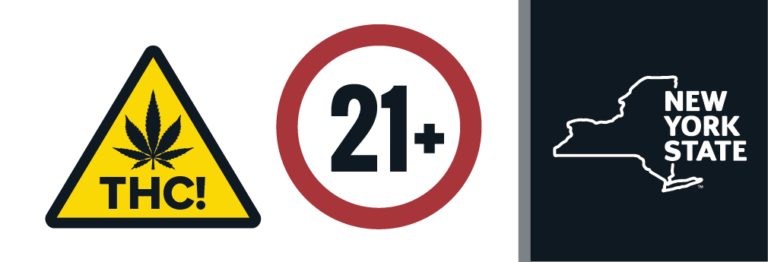
New York State’s Universal Symbol
The universal symbol refers to an image developed by OCM that is required to be placed on a licensed cannabis product retail package. The three parts of the universal symbol indicate the product contains THC, is legal for individuals 21 or older, and is regulated by New York State.
O
-
Overconsumption
Overconsumption, or “greening out,” happens when too much cannabis is consumed too quickly. Overconsuming cannabis can cause anxiety, paranoia, panic attacks, severe nausea or vomiting, rapid heart rate, fainting, and dizziness.
P
-
Pod
A ‘pod’ is a small, disposable oil container that usually contains THC or nicotine. Pods and cartridges make up the two main types of disposable THC oil containers.
-
Potency
Potency is the strength of a cannabis product, based on how much THC, CBD, and other cannabinoids are in it. Higher potency means stronger effects and can pose a greater risk, particularly for young people.
-
Pre-roll
A pre-roll is a ready-made cannabis joint, sold already assembled. It’s typically made from ground flower rolled into rolling papers, sometimes with a filter tip. Infused pre-rolls are infused with extra THC (like concentrates or oil), making them stronger and more potent than a regular pre-roll.
R
-
Rolling papers
A thin piece of special paper used to wrap ground-up cannabis flower to make a joint. Rolling papers are made from various materials, including hemp, wood pulp, and flax.
S
-
Sativa
Sativas are cannabis cultivars, or strains, that are usually marketed as “energizing” or “uplifting,” but the effects depend more on the mix of cannabinoids and terpenes in the product than on being a sativa strain alone.
-
Shatter
Shatter is a highly potent cannabis concentrate known for its glass-like appearance. It is usually used in dab rigs or vaporizers.
-
Spliff
A hand-rolled cigarette with a mixture of cannabis and tobacco.
-
Strain
A strain refers to a specific variation of cannabis that is bred for certain characteristics, including flavor, aroma, and effect. Strains can be indica, sativa, or a hybrid; however, they don’t tell the full story of how a cannabis product will make the consumer feel, because the effects are shaped more by things like cannabinoids and terpenes, which work together in different combinations in each product.
-
Synthetic Cannabinoids
Synthetic Cannabinoids, such as K2 and Spice, are illegal, chemically produced substances that do not come from the cannabis plant. These substances can be fatal in some cases when consumed.
T
-
Terpenes
Terpenes are the compound that determines the cannabis plant’s scent, flavor, and color.
-
THC
THC, short for tetrahydrocannabinol, and also known as Delta-9 THC, refers to the main chemical compound in cannabis that causes a “high.” Generally, the higher the THC in a product, the more intense the high.
-
Tincture
Cannabis-infused liquid that can be consumed via a dropper sublingually (below the tongue) or mixed into foods and drinks.
-
Tolerance
With regular use, the body may become less sensitive to the effects of cannabis. This means a person may need a more potent (stronger) cannabis product or to use more to feel the same effects.
-
Topical
Topicals are cannabis products that are applied directly to the skin. These are usually infused lotions, balms, and oils that are typically used for medical reasons, like to relieve pain or inflammation. Topicals can have THC, CBD, or a mixture of both, and other cannabinoids; however, THC won’t reach your bloodstream through your skin in any meaningful way, so they don’t get you high.
-
Trichomes
Trichomes are the crystal-like resin glands that cover the cannabis flower and leaves and contain cannabinoids, terpenes, and other compounds.
V
-
Vape
A vape is a device that heats enclosed liquid into an aerosol (vapor, mist) that is inhaled into the lungs. Vapes can come in different forms, including vape pens and other portable or tabletop devices. The process of inhaling cannabis vapor from a vape pen or some other vaporizer is called “vaping.” Vapes can contain nicotine, THC, CBD, flavorings, additives, or other chemicals. You can’t always tell what’s inside just by sight, smell, look, or feel! Because vapes contain a product or substance, their vapor is not harmless. Smoking or vaping weed can harm your lungs. Vapes can also deliver high (stronger, more potent) levels of THC quickly, making the effects harder to predict and control.
Learn more about vapes and other cannabis concentrates.
Additional Languages: Español | Français | Kreyòl Ayisyen
W
-
Wax
Wax is a highly potent cannabis concentrate that resembles… wax. It is usually used by vaping with a special pipe called a “dab” or a vaporizer device, but it might also be mixed with flower in a joint.
-
Withdrawal
Using cannabis consistently over an extended period of time may lead to the development of a tolerance to cannabis. Once you have developed a tolerance, withdrawal can occur if you substantially reduce the amount or potency of the cannabis you are consuming or if you stop cannabis consumption temporarily or completely. Symptoms may develop within a few days after the last time you used cannabis. Withdrawal symptoms typically last up to two weeks and can include irritability, anxiety, insomnia, reduced appetite, nausea, mild depression, and an upset stomach.